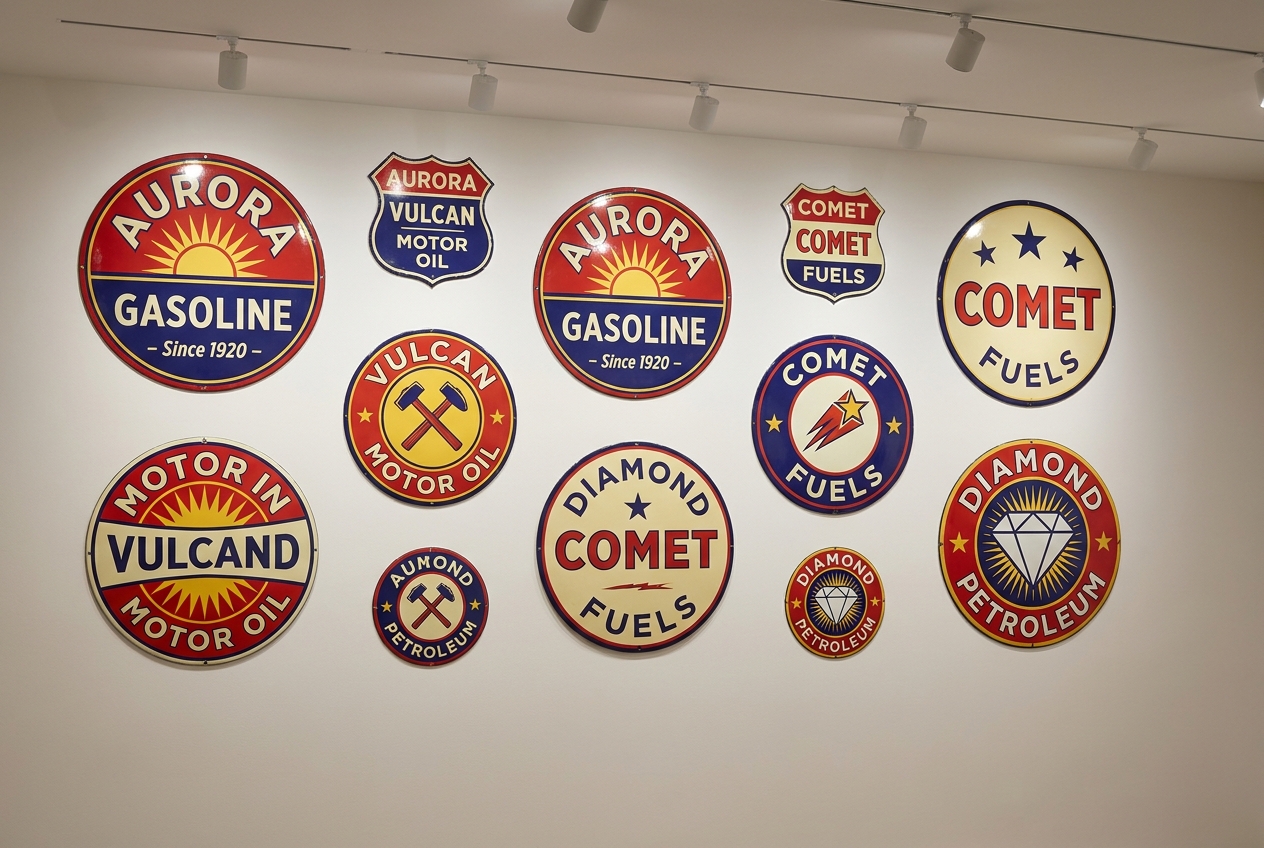
Why It Matters Twice
The original-versus-repro question matters two ways for a petroliana collector. First, it's the difference between a sign worth a few dollars and one worth thousands. Second, it determines how the piece should be insured — because agreed-value coverage is only as good as the documentation behind the value. Knowing what you actually own is step one.
Tells of an Original Porcelain Sign
No single test is definitive, but originals tend to share traits reproductions struggle to fake:
- Layered enamel and color depth. Original porcelain was fired in layers; under chips you'll often see distinct color layers and a slightly raised feel where colors meet.
- Period-correct grommets and holes. Mounting holes show real wear; grommets are aged and consistent with the era.
- Honest crazing and chipping. Age produces fine crazing and edge chips that reveal dark metal underneath — not painted-on "fake" rust.
- Back patina. Original backs show genuine oxidation and often a manufacturer's stamp or date.
- Correct size and gauge. Reproductions are frequently the wrong dimensions or made of thinner, lighter steel.
Red Flags of a Reproduction
- Uniform, "perfect" aging or rust that looks airbrushed
- Modern Phillips-head mounting hardware
- Glossy, single-layer color with no depth at the edges
- Sizes that don't match documented originals
- A back that looks newer than the front
When You're Not Sure
For higher-value pieces, get a second opinion from an experienced dealer or a recognized appraiser before you buy — and certainly before you insure a piece at a high scheduled value. The cost of an appraisal is small next to the value it protects (or the disappointment it prevents).
How Insurers Treat Each
Coverage follows documented value:
- Originals are scheduled at agreed value based on comparable sales or an appraisal. Condition grade matters — a new chip from handling can be a real, claimable loss.
- Quality reproductions have modest value and are usually folded into a blanket limit rather than scheduled.
- Misrepresented pieces are the risk: insuring a repro as an original means paying premium on value you don't have and facing a documentation gap at claim time.
Document What You Own
Photograph each significant sign front and back, record where and when you bought it and for how much, and keep any appraisals. That record is what turns "I think it's worth X" into an agreed value your policy will actually pay. We help collectors build that documentation as part of scheduling a collection. [Get a quote](/quote) to get started.