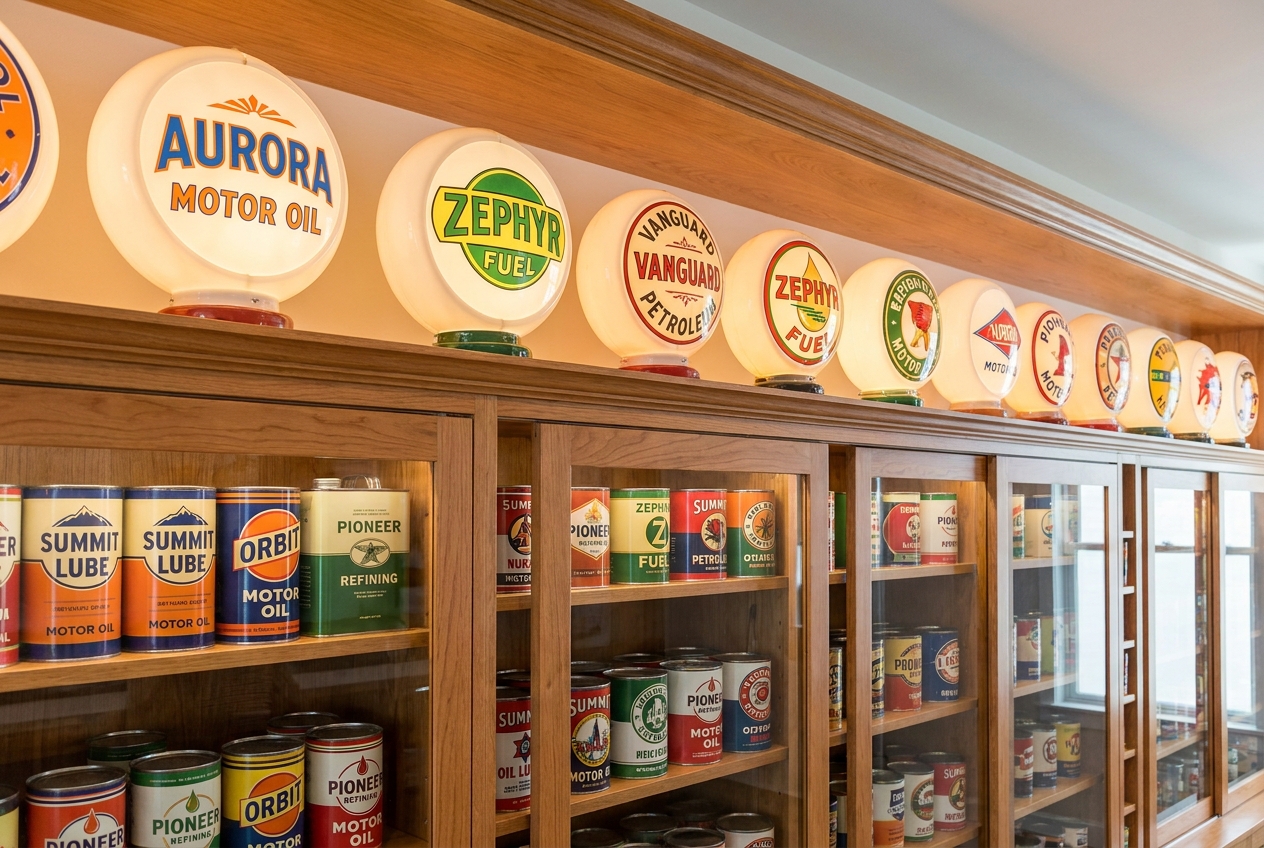
The Crown Jewel — and the Most Fragile Piece
A gas-pump globe sits at the top of the pump and, often, at the top of a collection's value. Globes are also glass — which means the single most valuable item on a restored pump is also the one most likely to shatter in a fall, a bump, or a bad day in transit. Understanding globes helps you collect smarter and insure them properly.
Body Types
Collectors classify globes mostly by body construction:
- One-piece (etched or baked). The earliest and often most valuable — the entire globe is a single piece of glass.
- Metal-band (two-piece). Two glass lenses held in a metal frame; common from the 1920s–1930s.
- Glass-frame (Gill, etc.). Two lenses in a glass body — prized and fragile.
- Plastic-body (Capco). Later globes with plastic frames holding glass lenses.
What Drives Globe Value
- Rarity of the brand and design — figural and one-piece globes command premiums
- Lens condition — cracks, chips, and faded color drop value fast
- Originality — original lenses in a matching original body beat reproductions
- Completeness — both lenses present and undamaged
A desirable one-piece or figural globe can be worth thousands; reproduction lenses are worth a fraction.
The Breakage Problem
Here's the issue that catches globe collectors off guard: standard homeowners policies frequently exclude glass breakage as wear, and sub-limit collectibles to begin with. So the very loss most likely to happen to a globe — it breaks — is often the one your house policy won't pay.
Insuring Globes the Right Way
A specialty collectibles floater with accidental breakage is built for this:
- Agreed value on rare globes and lenses, documented up front
- Accidental breakage of glass covered, on the shelf and in transit
- Theft of small, easily-carried, high-value pieces
- Off-premises and show coverage for globes you display or sell
Handle, Store, and Insure With Care
Pad and brace globes for transit, display them where they can't be knocked, and photograph and document the rare ones. Then schedule them on a policy that actually covers breakage — because with globes, it's not a question of if a piece of glass will ever be at risk, but when. [Request a quote](/quote) and we'll make sure your globes are covered for the way glass actually fails.